
Some of the most transformative moves in interior design are not structural at all. Wallpaper, mirrors, and texture are three of the most versatile tools in a designer’s kit, each capable of reshaping how a room feels without altering a single wall, window, or floor plan. Used individually or in combination, they offer a way to introduce depth, light, and character into a space at a fraction of the cost and disruption of a structural renovation.
Benefits of Wallpaper: Beyond the Obvious
Wallpaper provides nearly unlimited opportunity to bring color, texture, and pattern into a space and the category itself spans far more than most homeowners realize. It is one of the most versatile tools available to a designer, capable of transforming a room without touching a single structural element.
A Broader Category Than Most Homeowners Expect
“Wallpaper or wallcoverings provide unlimited opportunities for enhancing interior spaces with color, texture and pattern. They range from printed, to embossed, foil and vinyl-coated papers; and wallcoverings can include grasscloths, woven materials, leathers, wood veneers, and more.”
— Greg Roth, Senior Interior Designer, Home Front Build
That range matters. A printed botanical paper, a textured grasscloth, and a metallic foil wallcovering each behave entirely differently in a room in how they reflect light, how they age, and how they read from across a space versus up close. Understanding that breadth is often the first step in selecting the right wallcovering for a given application.
Other Ways to Use Wallpaper
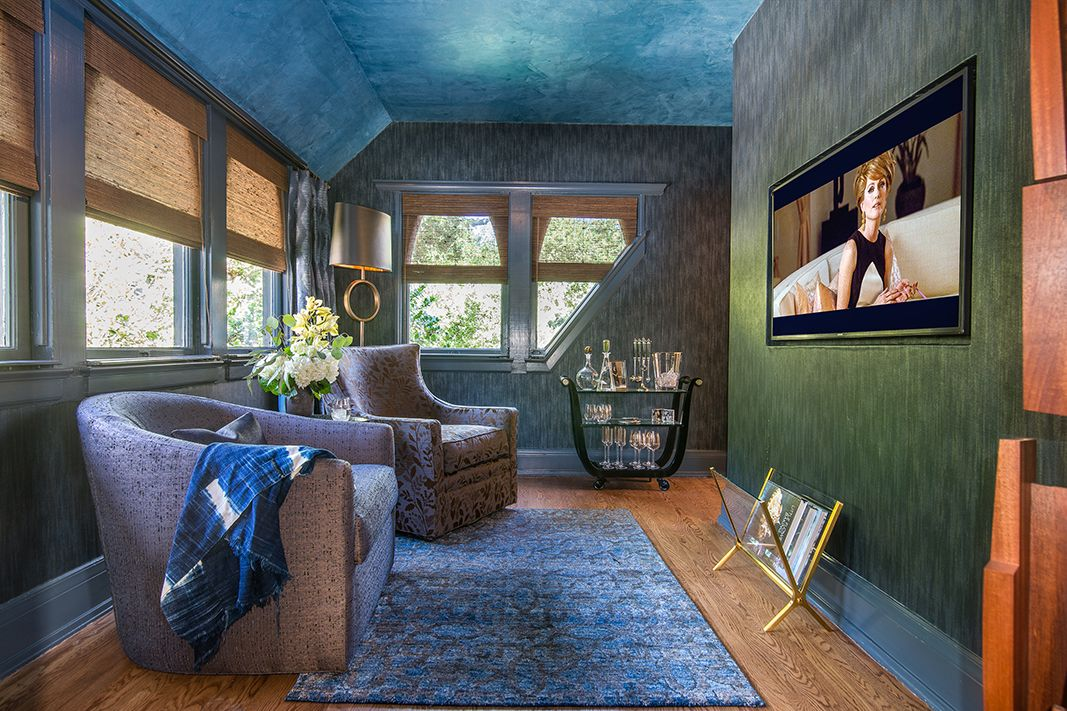
The most obvious use of wallpaper is, naturally, covering walls. But its applications extend further than that. Wallpaper can be installed on ceilings, inside the interiors of casegoods and cabinetry, or even applied to furniture surfaces, each application producing a distinct effect.
Papering a ceiling, for example, draws the eye upward in a way that paint alone rarely achieves, and can be especially effective in a dining room or powder room where a sense of intimacy or drama is welcome. Lining the interior of a cabinet or bookcase with a patterned paper turns an otherwise utilitarian storage element into a considered design moment, visible only when the doors are open, a quiet surprise rather than a constant presence.
Creative Ways to Use Wallpaper
Designers often use wallpaper deliberately as a focal point covering a single accent wall with a dramatic or colorful pattern in an otherwise subdued space to create what is sometimes called a “wow moment.” This approach allows a homeowner to introduce boldness without committing an entire room to it, concentrating the impact where it will be most felt: behind a bed, along a stairwell, or as a backdrop to a dining table.
Wallpaper can also be used more subtly, to imbue a space with quiet texture or mood rather than overt pattern; a paper featuring a soft watercolor-style motif, for instance, can add depth to a room without announcing itself.
Coordinating Wallpaper
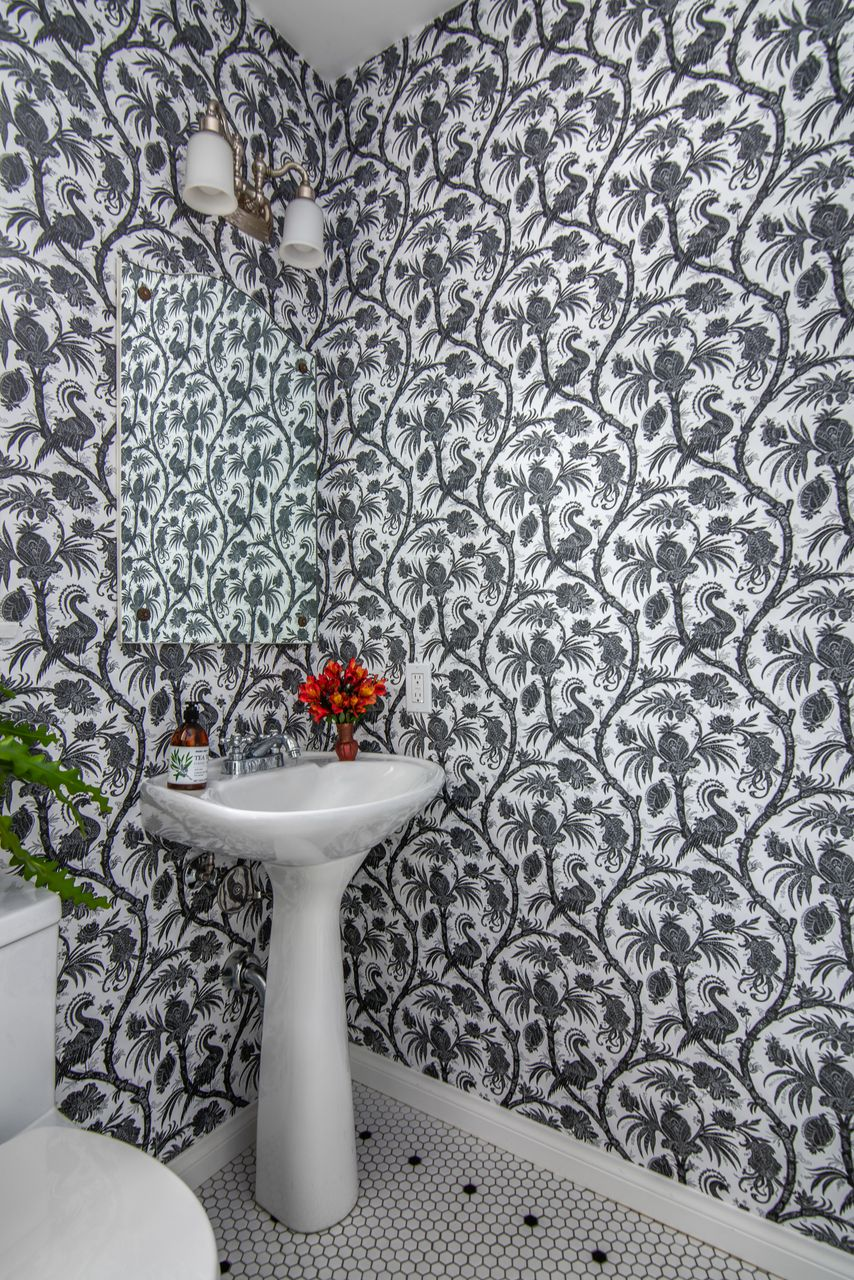
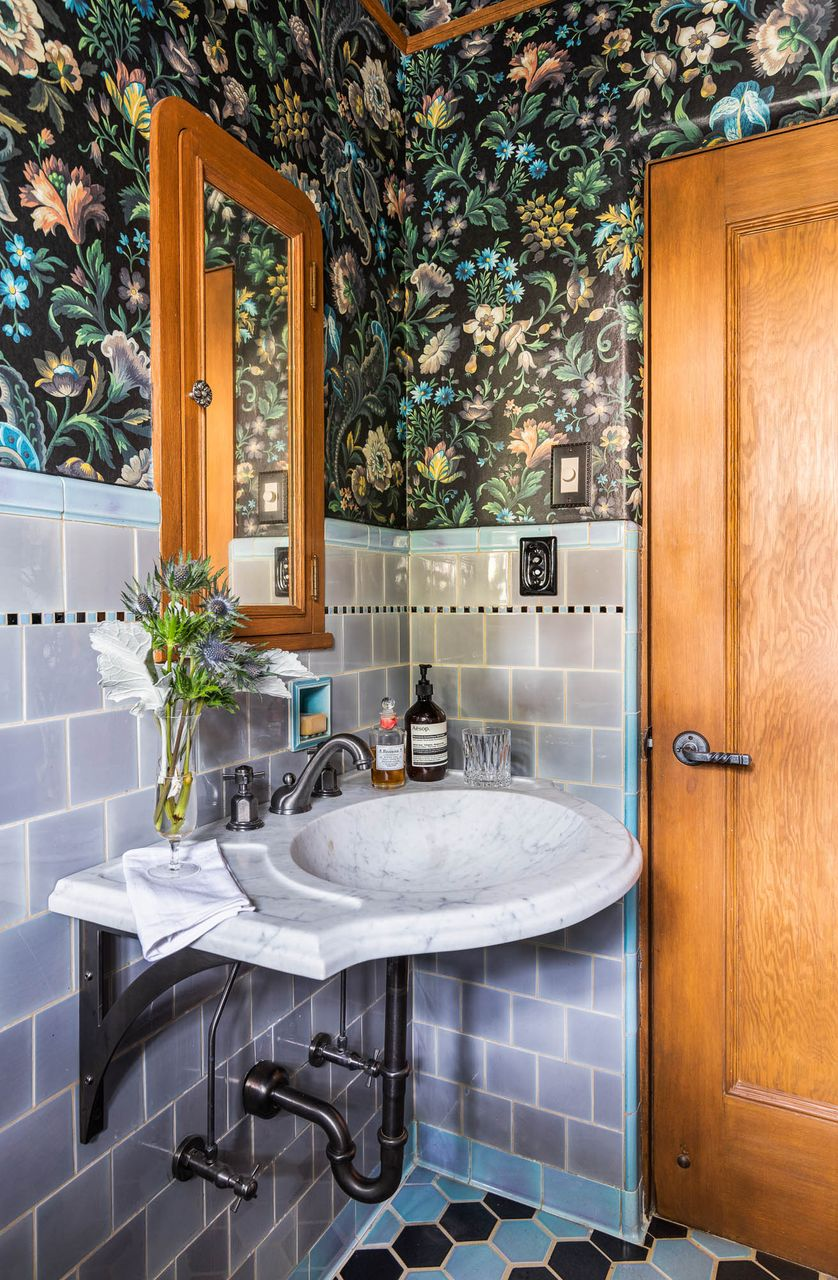
Practical considerations matter as much as aesthetic ones. A gold foil paper on a dining room ceiling can lend a warm, reflective glow to evening gatherings, amplifying candlelight or low ambient lighting in a way flat paint cannot. A bold, colorful, or maximalist paper in a smaller, less-frequented space, a powder room, for instance can have outsized visual impact precisely because its presence is contained to a space guests pass through rather than linger in for hours.
By contrast, a living room or primary bedroom, spaces inhabited daily for extended periods, often call for restraint a quieter pattern or a textural grasscloth that rewards long-term living rather than a graphic statement that might feel overwhelming over time. As with most design decisions, the right wallpaper choice depends as much on how a room is used as on how it looks in a single photograph.
Interior Decorating with Mirrors: Light Depth, and Scale
Mirrors do more than serve a vanity, dresser, or console, though that remains their most familiar role. Used with intention, mirrors offer one of the simplest and most effective ways to bring additional light, depth, and a sense of scale into a space often without any structural change at all.
A Tradition Rooted in Light
Historically, before electric lighting existed, mirrors were positioned deliberately to reflect and amplify candlelight. This is part of why so many antique wall sconces and chandeliers were built with mirrored backing or faceted glass elements; the mirror wasn’t decorative alone, it was functional, multiplying the available light in a room after dark.
That historical logic still holds today, even in homes with abundant electric and natural light. A mirror positioned to catch and reflect a window’s light, or to bounce the glow of a chandelier across a room, can meaningfully change how bright and alive a space feels at different times of day.
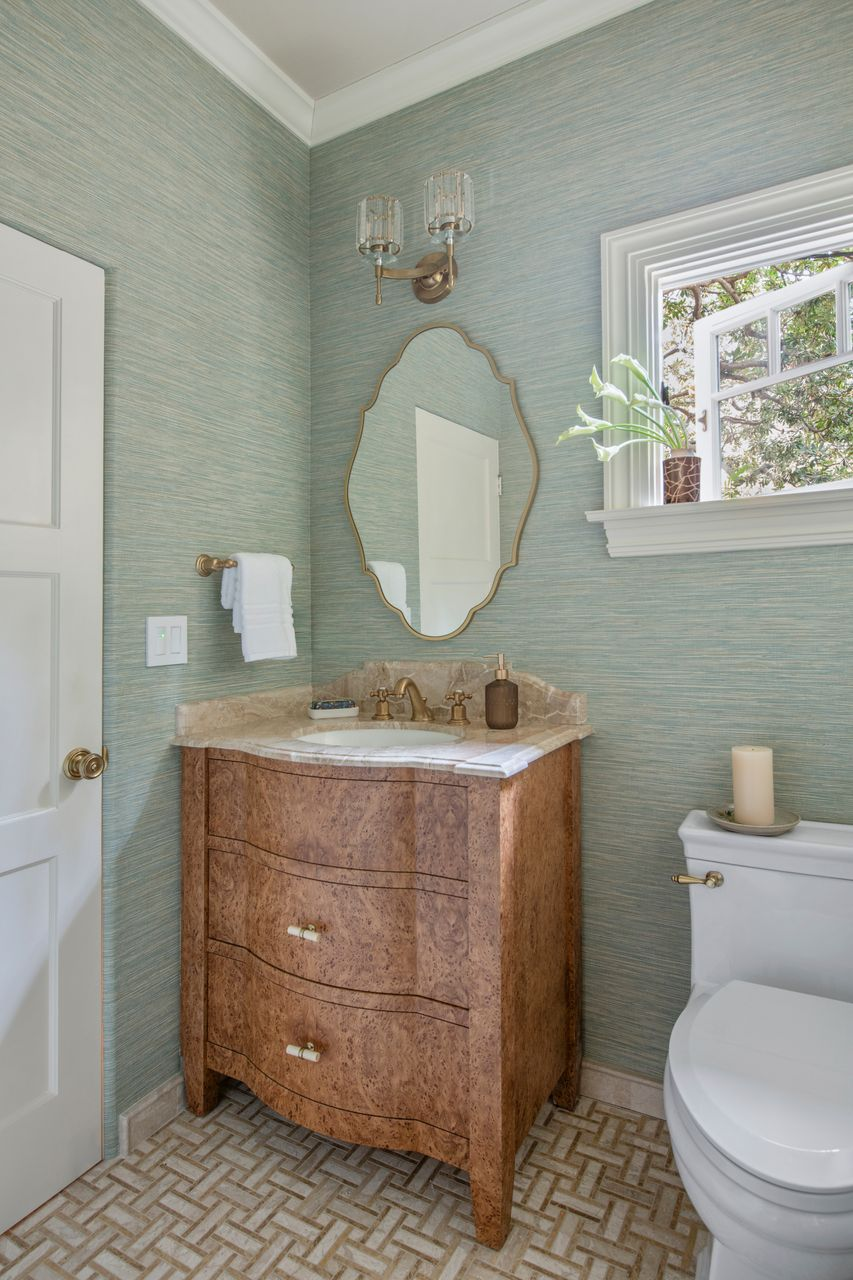
The Illusion of Depth and Scale
“The Palace at Versailles features a mirror-covered ballroom, the Hall of Mirrors, which uses mirrors both to bring a warm glow and sparkle into the space, and to give the sense that the room is much grander than it actually is.”
— Greg Roth, Senior Interior Designer, Home Front Build
That same principle applies at any scale, in any home. A single well-placed mirror can make a narrow hallway feel wider, a low-ceilinged room feel taller, or a small dining nook feel more expansive than its actual footprint. The effect comes from the way a mirror extends a sightline visually the eye perceives the reflected space as a continuation of the room, rather than as a flat surface.
Contemporary Ambience
In contemporary interiors, that historical principle translates into several practical applications. A framed mirror positioned opposite a window can double the perceived light entering a room. A full mirrored wall in a small powder room or entry can make the space feel significantly larger than its actual square footage. Even a mirrored ceiling, used sparingly and in the right setting, can enhance both the illumination and the perceived height of a room.
Mirrors also pair well with the other elements discussed in this series positioned near a textured wallcovering, a mirror can amplify the visual interest of the pattern by reflecting it back into the room from a second angle, effectively doubling its presence without doubling its cost.
How to Use Mirrors in Decorating
Where a mirror is placed matters as much as the mirror itself. A mirror that reflects a beautiful view, a piece of art, or natural light tends to enhance a room. A mirror that reflects clutter, a blank wall, or an unflattering angle can undercut the very effect it’s meant to create. As with most design elements, the most successful mirror placements are the ones a guest notices only as a feeling of a room that seems brighter, larger, more alive without immediately registering why.
Textures in Interior Design
Texture brings a tactile, sensory dimension to design that color and form alone cannot achieve. It is, in many ways, the element most responsible for whether a room feels merely “decorated” or genuinely layered and considered.
Where Texture Comes From
“Texture can be achieved in myriad ways: in the embossed or varied surfaces of glazed ceramic tiles; in the accentuated or weathered grain of a wood floor or wall panel; in the knubby fibers or thick weave of a hand-made textile; in the hewn, polished, or flamed surface of a stone counter.”
— Greg Roth, Senior Interior Designer, Home Front Build
This range illustrates how broadly texture can be sourced within a single project from the largest surfaces in a room, like flooring and countertops, down to the smallest details, like the weave of a throw pillow or the grain of a wood handle. No single material carries the responsibility for a room’s texture; instead, it accumulates across dozens of small decisions.
Natural Elements in Interior Design
Texture isn’t limited to hard materials and fabrics. Natural elements, such as light and water, can introduce texture into a space as well as in the dappled sunlight that filters through a fritted glass windowpane, casting a moving, textured pattern across a floor, or the rippling movement of water in an indoor fountain. These dynamic, ever-changing textures bring a quality to a room that static materials cannot replicate, since they shift throughout the day.
Texture in Interior Design: How to Tell a Story
Bringing texture into a design offers a multifaceted way to add layering, sophistication, interest, and storytelling into a space. A textured fabric, for example, can add comfort, warmth, and tactility to a sofa or lounge chair that a simple, smooth-woven fabric lacks changing not just how the piece looks, but how it feels to actually sit in. A weathered wood floor carries a sense of history and patina that a uniform, machine-finished surface cannot convey, regardless of how closely it might be styled to look similar in a photograph.
Layering Textures and Colors
When conceiving a design and sourcing material selections, designers often look to provide a balanced combination of colors, patterns, and textures, layering a space with elements that not only stand on their own, but that work in harmonious combination to create a sense of interest, sophistication, and comfort. Texture is rarely the star of a room in the way a bold color or pattern might be; instead, it tends to be the element that makes everything else feel complete, the difference between a space that looks good in a photograph and one that feels good to actually live in.
FAQs
What are the benefits of using wallpaper in interior design?
Wallpaper can add color, pattern, and personality to a space. It can help define a room’s style, highlight an accent wall, add visual depth, and introduce textures that paint alone cannot achieve.
Is wallpaper still popular in modern interior design?
Wallpaper is becoming increasingly popular in modern interiors like bold patterns, textured finishes, mirrors, and subtle designs to create customized spaces.
What rooms work best with wallpaper?
Wallpaper can be used in almost any room, including bedrooms, living rooms, dining rooms, home offices, kitchens, and entryways.
How can mirrors make a room look bigger?
Mirrors reflect light and create the illusion of additional space, making rooms feel brighter and more open. Placing a mirror across from a window or in a narrow hallway can help maximize natural light and add depth to the room.
How can texture improve a room’s design?
Texture adds dimension and visual appeal. Incorporating materials like wood, stone, woven fabrics, and textured wallpaper can create a warmer and more layered look.
Can wallpaper and texture be used together?
Combining wallpaper with textured elements is a great way to create a space that feels sophisticated, inviting, and personally designed. A subtle textured wallpaper adds depth and dimension without overwhelming the room.
Serving, Los Angeles County – Mt. Washington, Hancock Park, Hollywood Hills, Malibu, Los Feliz, Pacific Palisades, Brentwood, Pasadena, Glendale, Santa Monica, Pacific Palisades, Bel Air, Beverly Hills, Pasadena, South Pasadena, Burbank, Glendale, and surrounding areas.