Long before “wellness” became a design buzzword, Feng Shui was already asking a more fundamental question: how does the shape of a space affect the way we feel within it? Feng Shui is an age-old organizational philosophy, originating in China, built around prescribed design elements and practices meant to support health, well-being, and good fortune. At its core, it is a system for balancing and harmonizing energy, or Chi, within an environment, a framework that predates modern design language by centuries yet anticipates many of the same instincts.
For homeowners encountering the term for the first time, Feng Shui can sound abstract, even mystical. In practice, much of it maps onto principles that any thoughtful designer or architect already considers orientation, flow, sequence, and the pacing of arrival. Strip away the philosophical framing, and Feng Shui is, in many respects, a study in how a home is experienced sequentially, moment by moment, rather than as a static floor plan viewed from above.
Feng Shui Entrance
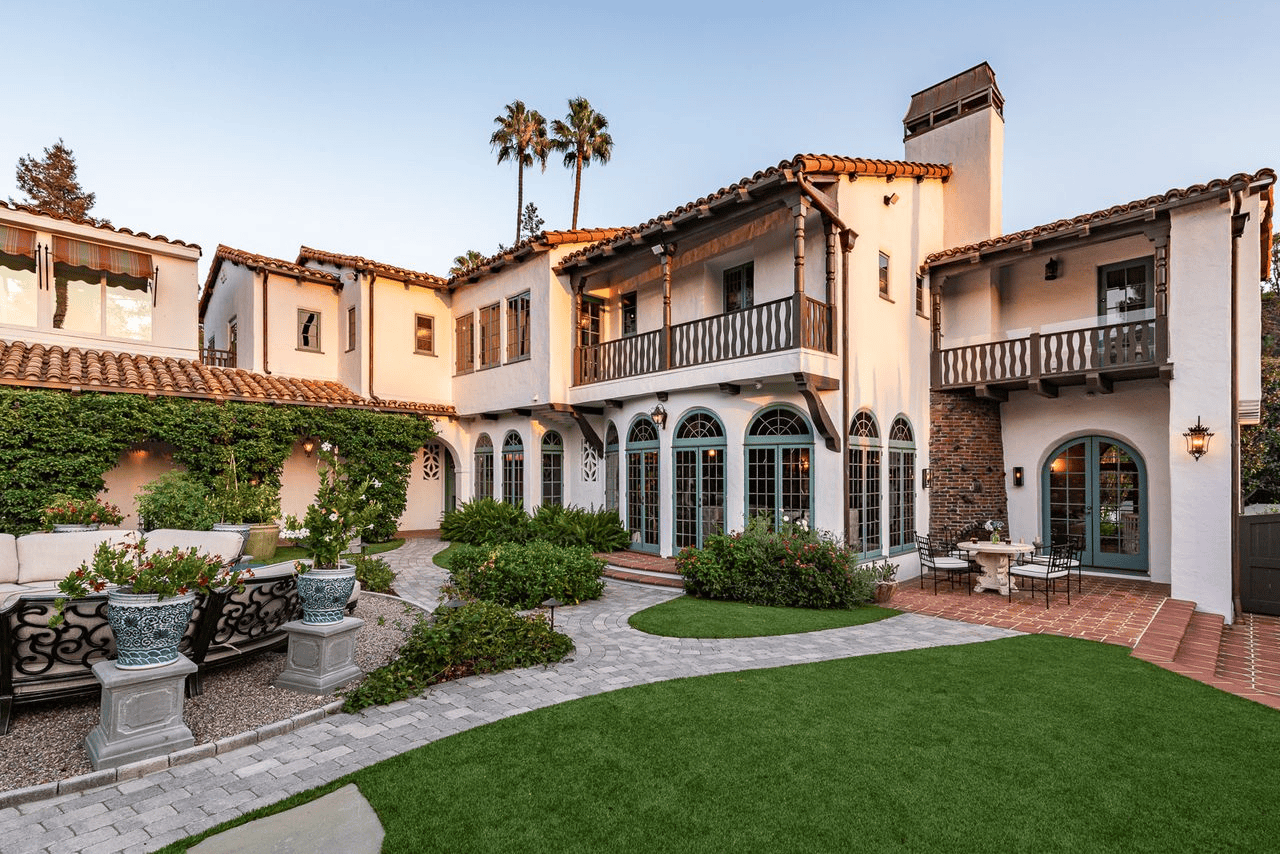
One of the clearest, most accessible examples of Feng Shui in practice is the design of an entry path
“In a well-planned Feng Shui landscape design, the walkway to a home’s front door does not approach the entry in a direct straight line from the street, but rather meanders or takes a curve or two, and is accented by lush, inviting landscaping. A meandering pathway is meant to slow down energy, whereas a straight line is considered to speed up energy, thereby offering a more relaxed sense of arrival.”
— Greg Roth, Senior Interior Designer, Home Front Build
This is the kind of detail that rarely registers consciously yet shapes a homeowner’s experience every time they come home. A path that curves, lingers, and reveals the entry gradually changes the pace of arrival before a single door is opened. Compare that to a straight concrete walk running directly from curb to threshold: functional, certainly, but it offers no transition, no moment to shed the pace of the outside world before stepping inside.
Feng Shui Home Design: Beyond the Front Walk
Applied to a whole-home design, Feng Shui principles extend well beyond the entry into the placement of furniture relative to doorways, the flow between rooms, and the relationship between a home’s public and private spaces. A bed positioned in a direct line with a bedroom door, for example, is traditionally avoided in Feng Shui practice, on the theory that it leaves the sleeper exposed to the energy moving through the room. A kitchen positioned where it can be seen immediately upon entering the home is similarly approached with care, since it places a utilitarian space at the center of a guest’s first impression.
Whether or not a homeowner subscribes to the underlying philosophy of Chi, the practical design logic holds up: spaces that unfold gradually, that offer moments of transition and pause, tend to feel more considered and more comfortable to move through than spaces that present everything at once.
Feng Shui in House Design
For HFB, these considerations align naturally with our broader approach to design. A home should be planned as a sequence of experiences, not simply a collection of rooms, with each transition, from street to entry, from public room to private one, from light to shadow considered as deliberately as the rooms themselves. Feng Shui offers a useful vocabulary for that thinking, even for homeowners who approach it purely as a design philosophy rather than a spiritual one.
In a custom whole-home renovation or new build, this kind of sequencing is easiest to achieve early, at the architectural and landscape planning stage, when entry paths, sightlines, and room adjacencies are still flexible. It is a reminder that good design is rarely only about what a room contains, it is equally about how a person arrives there, and what they feel in the moments leading to it.
FAQs
What is Feng Shui in modern interior design?
Feng Shui is an ancient Chinese practice that focuses on arranging spaces to support balance, harmony, and positive energy flow (Chi) and design principles like decluttering, natural light, and intentional furniture placement.
How does furniture placement affect Feng Shui?
Furniture placement influences how energy flows through a room. For example, beds, desks, and sofas should ideally be in a “command position,” where you can see the door without being directly in line with it. It’s to create stability, awareness, and better energy flow.
Is clutter really that important in Feng Shui?
Yes, because clutter is thought to block energy flow and create mental stagnation. Clutter-free spaces tend to reduce stress and improve focus.
How do mirrors affect Feng Shui in a home?
Mirrors can either enhance or disrupt energy flow. They’re often used to reflect light and expand space, and shouldn’t face beds or reflect clutter because that can create visual and energetic disturbance.
Can Feng Shui be used with minimalist design?
Yes, minimalism and Feng Shui often complement each other well because both emphasize simplicity, intentionality, and removing excess items that block flow.
Serving, Los Angeles County – Mt. Washington, Hancock Park, Hollywood Hills, Malibu, Los Feliz, Pacific Palisades, Brentwood, Pasadena, Glendale, Santa Monica, Pacific Palisades, Bel Air, Beverly Hills, Pasadena, South Pasadena, Burbank, Glendale, and surrounding areas.