

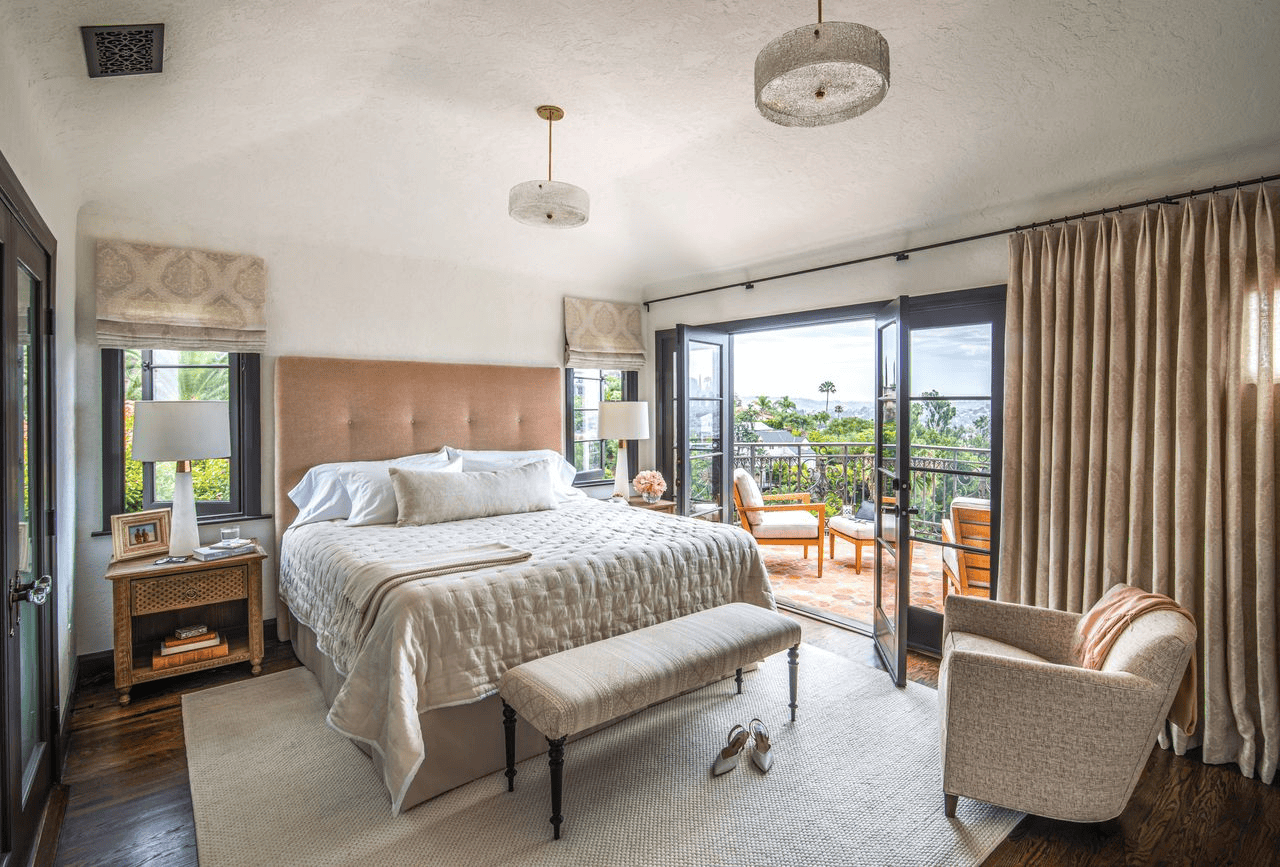
Monochrome design asks for a particular kind of discipline. By definition, it relies on a single color or tone for all finishes and materials in a space, walls, ceiling, rug, furniture, upholstery, window treatments, light fixtures, all rendered in variations of one hue. Done well, the result reads as quiet, cohesive, and deliberate. Done without care, it can fall flat, reading as bland rather than restrained.
Monochromatic Colors in Interior Design: Why It’s Harder Than It Looks
It is tempting to assume that limiting a palette to one color simplifies a design process. In practice, the opposite is often true. With color contrast removed as a tool, every other variable in a room texture, sheen, scale, proportion has to work harder to create visual interest. A designer working in monochrome has fewer levers to pull, which means each remaining decision carries more weight.
“To keep a monochrome design scheme from feeling oppressively monotonous, employing a variety of textures, patterns, materials and layers of elements can provide depth and interest.”
— Greg Roth, Senior Interior Designer, Home Front Build
This is the distinction that separates a sophisticated monochrome interior from a flat one: color is only one variable in a room. A space built entirely in shades of cream, for instance, can still carry tremendous visual interest through the contrast of a bouclé sofa against a smooth plaster wall, or a hand-knotted rug beside a polished stone surface. The eye reads difference through more than hue; it registers the matte versus the glossy, the soft versus the structured, the woven versus the carved.
Monochromatic Color Scheme in Interior Design: Building Depth Without Color Contrast
A few strategies tend to recur in well-executed monochrome interiors. Layering multiple materials within the same tonal family: a linen drapery, a wool rug, a lacquered side table introduces variation in texture even as the color stays consistent. Varying the finish, from matte plaster to honed stone to brushed metal, gives the eye different qualities of light to read. And introducing a pattern subtly, through a tonal weave or a low-contrast print, can add complexity without breaking the palette’s unity.
Scale and proportion also do quiet work in a monochrome room. Without strong color cues to define separate zones, furniture grouping and spatial proportion become the primary tools for organizing a space visually.
Where Monochrome Design Works Best
Monochrome design tends to suit homeowners drawn to a calm, unified aesthetic spaces meant to feel restful rather than stimulating. It often reads particularly well in bedrooms, where the goal is typically calm rather than energy, and in transitional spaces like hallways or entries, where a continuous palette can create a sense of flow from room to room.
The Role of Monochrome Lights
Lighting deserves particular attention in a monochrome interior, since it directly affects how a single tone reads throughout the day. Natural light shifts a cream wall from warm to cool depending on the hour and the season, and artificial lighting temperature warm versus cool bulbs can shift a neutral palette’s undertone significantly. In a more conventionally colorful room, these subtle shifts are often absorbed into the broader palette without much notice. In a monochrome room, where the tonal consistency is the entire premise, lighting design becomes one of the most important technical considerations in the project, not simply a finishing touch added at the end.
It is worth noting that monochrome does not mean the absence of personality. The choice of which single tone to build around a warm cream, a cool grey, a deep charcoal still carries enormous influence over how a space feels, and that decision deserves the same consideration as any color palette decision in a more conventionally varied room. For homeowners considering this approach, the conversation with a designer typically starts not with “what color,” but with “what mood” since the tonal choice that follows is meant to support that feeling throughout the entire space.
Monochromatic Design: Why This Palette Ages Well
One practical advantage of monochrome design is its longevity. Because the scheme isn’t built around a specific color trend, but rather a tonal relationship between materials, a well-executed monochrome room tends to remain visually relevant for considerably longer than interiors built around more fashion-driven color choices. For homeowners planning a renovation meant to last for decades rather than a single design cycle, that durability is a meaningful, if often overlooked, benefit of the approach.
FAQs
What is monochrome interior design?
Monochrome design uses a single color (or one base hue), using variations in its shades, tints, and tones to create depth, contrast, and visual interest throughout the space.
Will a monochrome room look boring?
The key to creating a monochromatic room is how it’s designed by incorporating materials like linen, wood, metal, and stone to keep the space visually engaging, even when the color palette is limited.
Is monochrome design good for small spaces?
Monochrome palettes can make small rooms feel larger and more cohesive because there are fewer visual breaks.
What’s the difference between monochrome and minimalist design?
They often overlap, but aren’t the same thing. Monochrome focuses on using a single-color palette. Minimalism is about simplicity and reducing visual clutter.
Can I mix monochrome with other design styles?
Monochrome design works well with:
- Scandinavian design
- Modern
- Industrial
Serving, Los Angeles County – Mt. Washington, Hancock Park, Hollywood Hills, Malibu, Los Feliz, Pacific Palisades, Brentwood, Pasadena, Glendale, Santa Monica, Pacific Palisades, Bel Air, Beverly Hills, Pasadena, South Pasadena, Burbank, Glendale, and surrounding areas.