

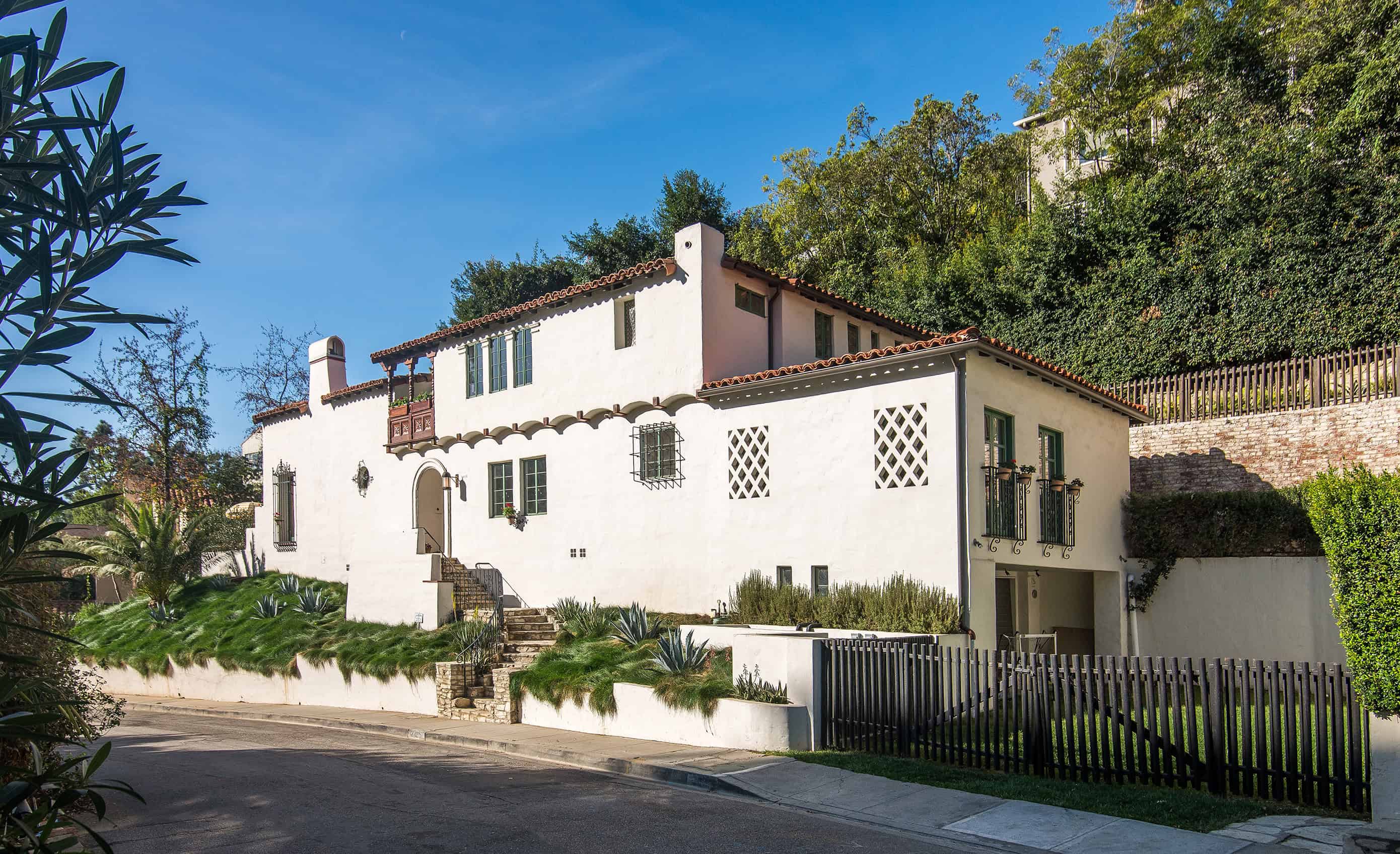
Los Angeles is full of Spanish Revival homes, the arched doorways, hand troweled plaster and terracotta toned details that define neighborhoods from West Hollywood to Los Feliz. But owning one of these homes comes with a real question: how do you update a nearly 100-year-old house for the way you live now, without erasing what made you fall in love with it in the first place?
At HFB, this is a balance we navigate on almost every Spanish Revival project. Below, our design team shares how they think about honoring what is original, what tends to get lost (and why), and how two projects put that philosophy into practice.
Spanish Interior Design Characteristics: What’s Worth Protecting in a Renovation
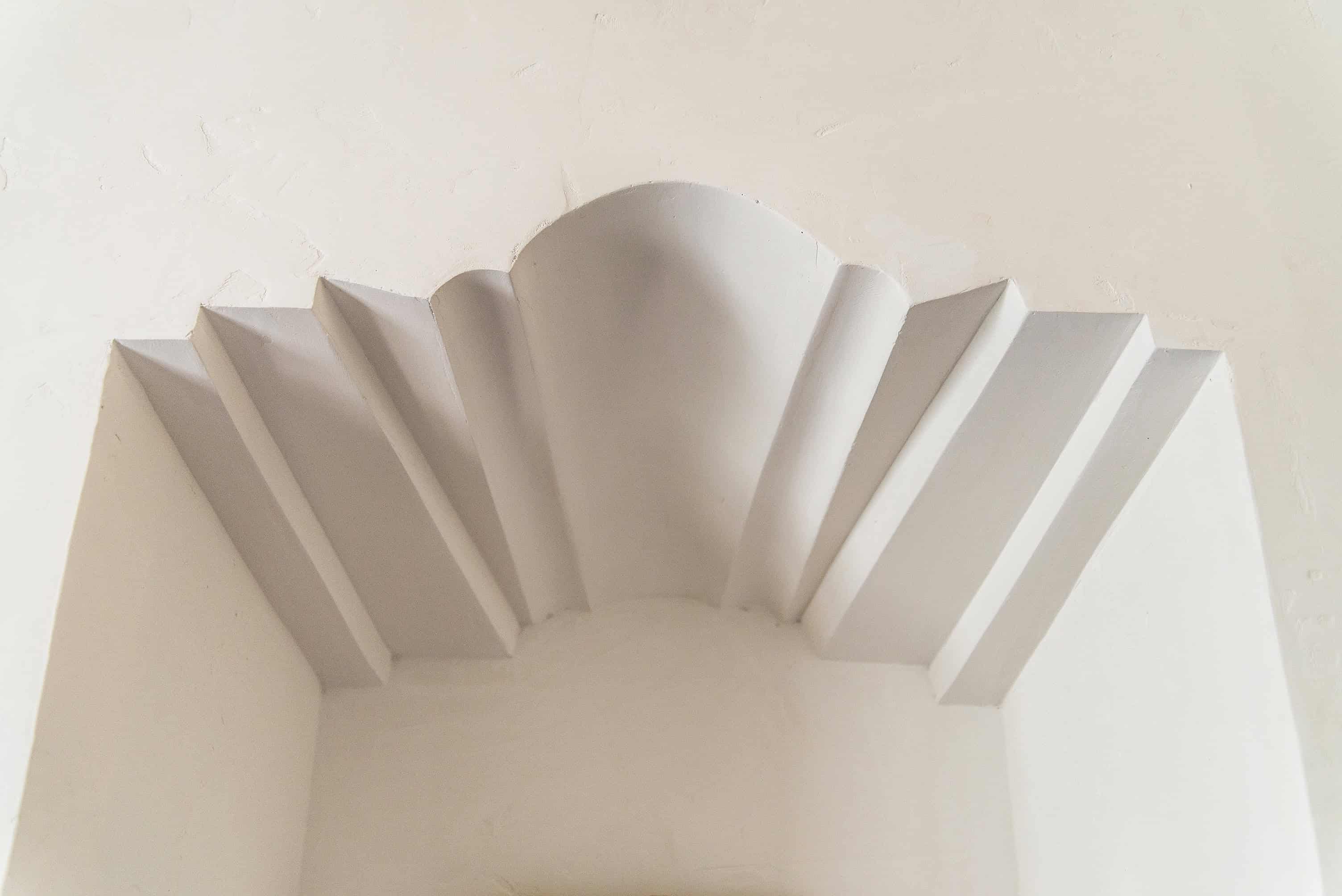
Every Spanish Revival home has details that are difficult, if not impossible, to replicate the handmade elements. Sr. Interior Designer Greg Roth points to wrought iron work, had troweled plaster and artisan tile as the features most worth protecting in a renovation, though holding onto them takes a real budgetary commitment from homeowners, since handmade details are costly to conserve or repair.
Two details are trickier. Original windows rarely meet today’s standards for thermal efficiency and original light fixtures have frequently disappeared entirely by the time a home changes hands. The upside, Greg notes, is that the market for authentic vintage Spanish Revival factures is strong, so finding period appropriate replacements is usually more straightforward than homeowners expect.
Designing With the House, Not Against It
Beyond individual details, these homes were built around a particular sense of flow. Arched plaster openings and bullnose framed doorways create an openness between rooms that feels distinctly Spanish Revival, and Greg’s approach is to build on that existing architectural language rather than override it. A common move: when connecting a remodeled kitchen to an existing dining room, extending the home’s own vocabulary instead of introducing a new one.
HFB Founder Steve Pallrand starts from a similar place but frames it as a discipline before deciding how far to push a design, the priority is making sure nothing gets stripped away that drew the homeowners to the house to begin with. Change is inevitable. A traditional Spanish Revival Kitchen, originally a back of the house workspace, now needs to function as the social center of the home but every change must feel like it belongs there, as though it were part of the original design intent.
As Steve puts it, the renovations that hold up are the ones where a home continues to be lived in, not kept behind glass. If a house isn’t adapted to modern life, it eventually stops being worth holding onto at all. The goal isn’t a museum piece; it’s a home that friends and family can walk into and never clock that any work was done.
Two Projects, Two Approaches
West Hollywood Spanish Revival Duplex
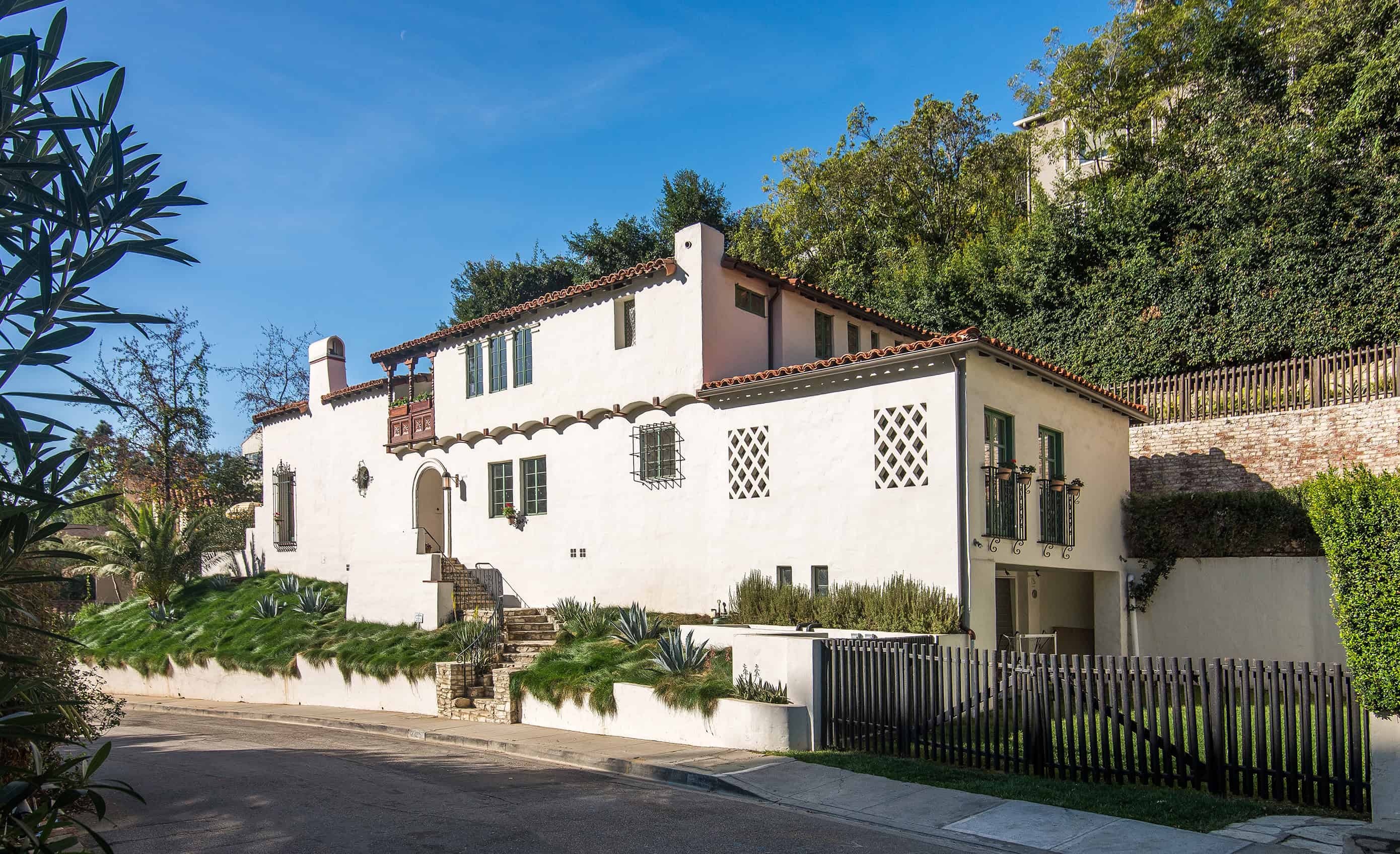
A West Hollywood duplex built in the 1920s came to us with plentiful original Spanish Revival detailing still intact. The renovation focused on bringing both units kitchen and baths up to date with new paint grade cabinetry, quartz counters, and Spanish and Moroccan patterned tile while completely reimagining the rear courtyard and exterior stair. The old, exposed lumber staircase was replaced with an arched stucco staircase that reads as though it had always been there, tying the home’s most visible street-facing change back to its architectural roots.
Los Feliz Spanish Colonial Revival
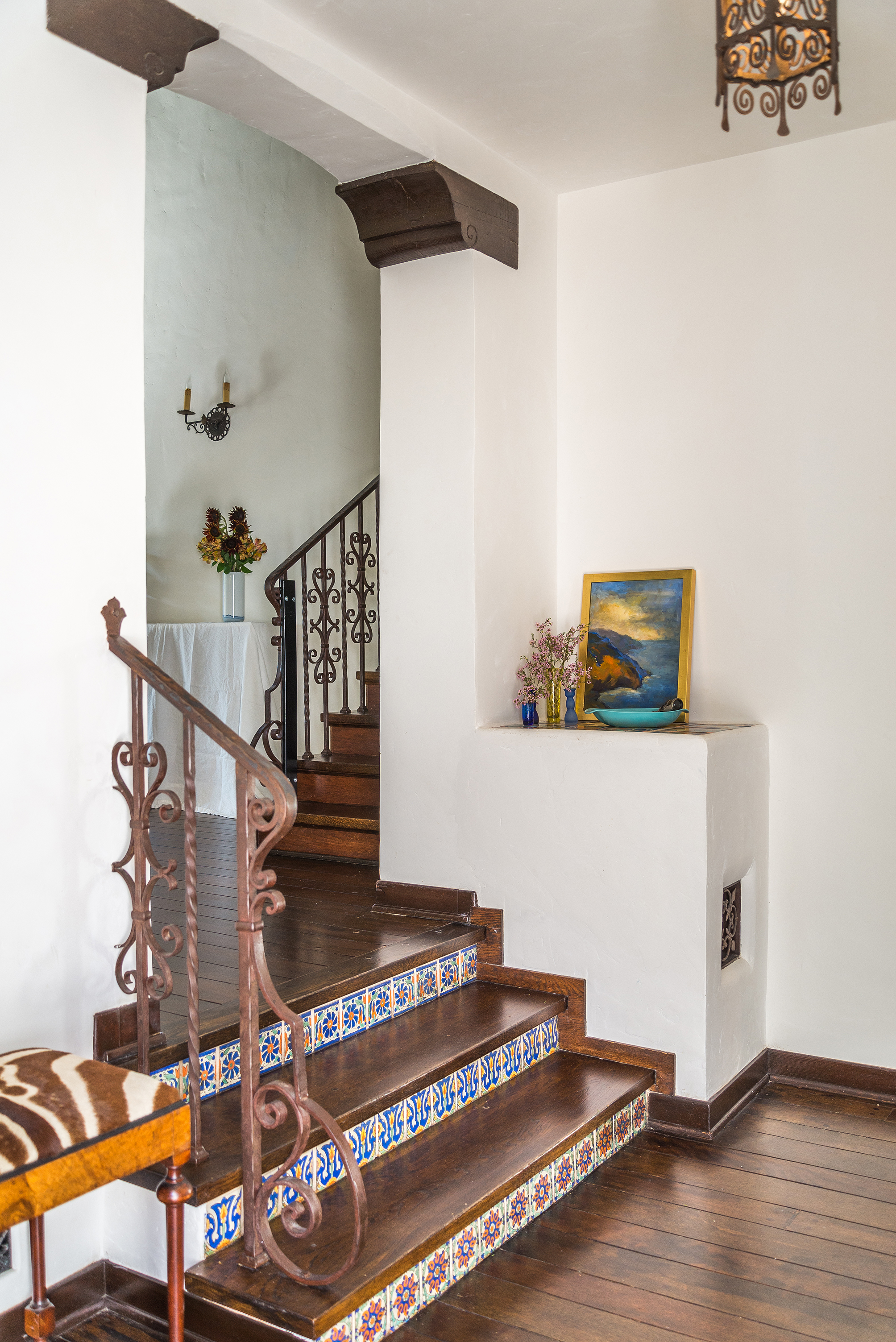
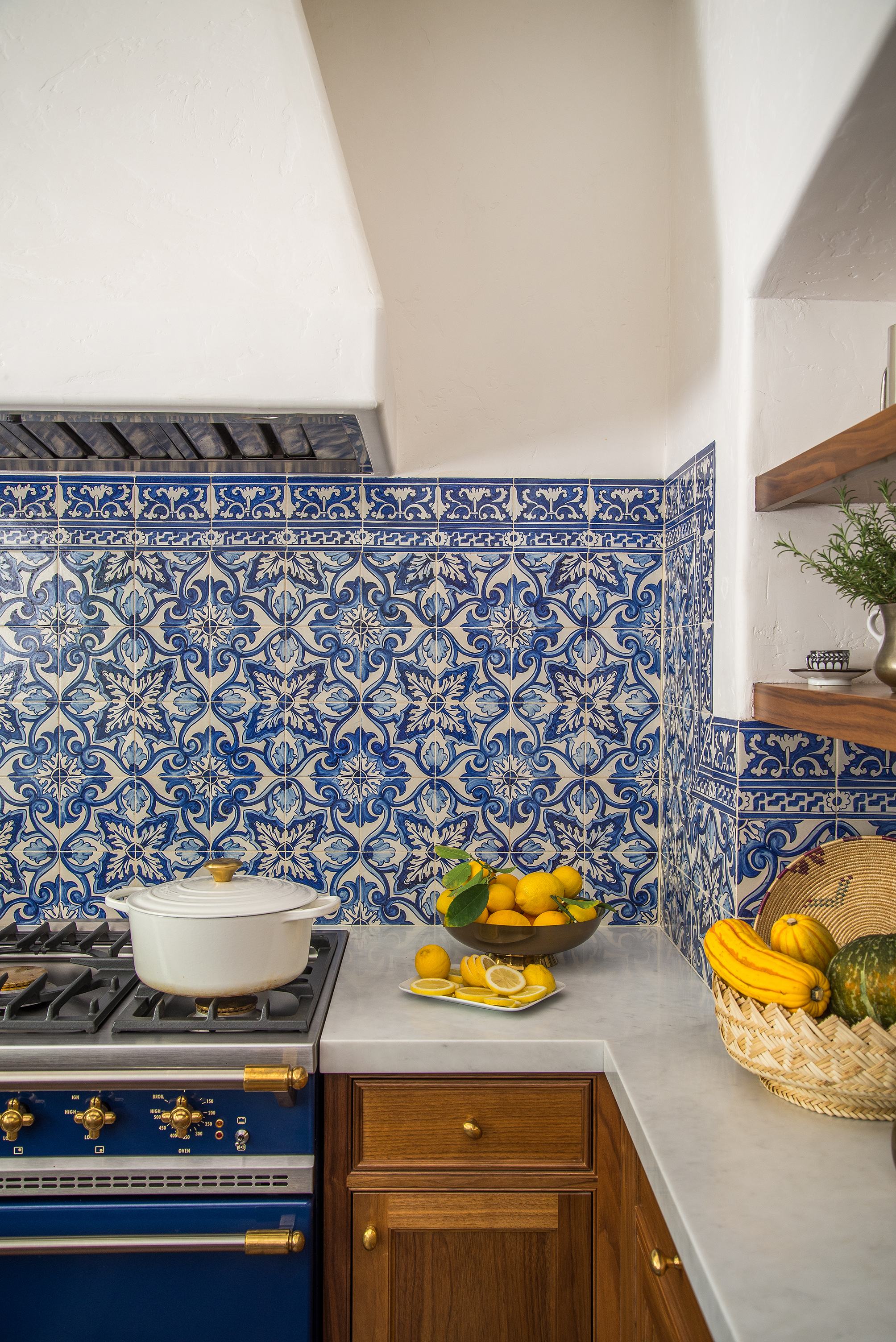
A 1920s Spanish Colonial Revival home in Los Feliz presented a different challenge: strict zoning limited any addition to just 300 square feet. The solution was reorganization rather than expansion, converting the original maid’s quarters and a small addition over the garage into a full primary suite and opening the kitchen to the rear yard through new plaster archways modeled directly on the home’s original entry arches. Custom walnut cabinetry, inspired by the home’s original millwork, and hand painted Portuguese tile rounded out a kitchen that fits seamlessly into a house full of original hand carved doors and ornate ironwork.
Spanish Revival Renovations in LA
Whether the project is a full duplex remodel or a tightly constrained addition, the same principle shows up again and again: honoring the original and updating for today aren’t opposing goals. The best Spanish Revival renovations use the home’s existing character as the design brief, not an obstacle to work around.
If you’re weighing a renovation on a Spanish Revival home, it’s worth knowing that the style is often confused with its close cousin, Mission revival. We break down what separated the two in Spanish Colonial vs. Mission Revival Architecture.
Have a Spanish Revival home you’re considering renovating? Reach out to Home Front Build to talk through what’s possible.
FAQs
How to decorate a Spanish style home?
Incorporate warm, earthy colors, natural materials, terracotta tile, wrought iron, rustic wood, exposed beams, textured textiles, vintage furnishings, and handcrafted details. Highlight architectural features like arches, niches, and plaster walls to create a warm, timeless Spanish-style interior.
What are the key features of Spanish colonial revival architecture?
Spanish Colonial Revival architecture is known for stucco exteriors, red clay tile roofs, arched doorways and windows, exposed wood beams, decorative tile, wrought iron details, and courtyards. The style blends warm, earthy colors with handcrafted materials to create a timeless Mediterranean feel.
What's the difference between Spanish Colonial and Spanish Revival?
Spanish Colonial architecture originated during Spain’s colonial period, while Spanish Revival is a later American architectural style inspired by Spanish and Mediterranean traditions. Spanish Revival homes are a popular early 20th-century American architectural style that blends Spanish, Moorish, and Mediterranean influences, especially in areas that have warm climates.
What colors complement a Spanish-style house?
Spanish-style homes pair especially well with warm, earthy tones like terracotta, white, sand, ochre, olive green, and warm brown. Deep blue, rust, and muted red can also add contrast while complementing classic Spanish tile and architectural details.
What are Spanish pattern tiles?
Spanish pattern tiles are decorative tiles featuring colorful geometric, floral, and Moorish-inspired designs. Often handcrafted and made from ceramic or clay, they add character to Spanish-style homes and are used for backsplashes, floors, stair risers, fireplaces, and accent walls.
Serving, Los Angeles County – Mt. Washington, Hancock Park, Hollywood Hills, Malibu, Los Feliz, Pacific Palisades, Brentwood, Pasadena, Glendale, Santa Monica, Pacific Palisades, Bel Air, Beverly Hills, Pasadena, South Pasadena, Burbank, Glendale, and surrounding areas.